EverDock Desktop
A desktop-first AI developer workstation for operating coding agents across local machines, SSH servers, and managed runners.
EverDock Desktop is an AI agent control plane for developers and teams that run coding agents such as Codex, Claude Code, OpenCode, Agy, Antigravity, and other agent CLIs across local machines, VPS instances, SSH targets, and managed servers. It turns agent work into observable sessions, task runs, terminal panes, approval requests, diffs, artifacts, and audit events.
The repository currently represents a functional desktop prototype and architecture exploration. Runner, managed server, sync, and enterprise governance layers are part of the commercial product direction and may not be fully public yet.
- Structures agent work as task runs linked to a workspace, repository, execution target, terminal session, file changes, test results, approval requests, artifacts, and completion/failure state.
- Shaped a risk-based approval model for command execution, sensitive file edits, dependency installation, secret access, git push, database migration, deployment, and production operations.
- Validated a human-in-the-loop workflow where agents handle long-running or repetitive work while developers focus on diff review, test evidence, approve/reject decisions, and exception handling.
Project Highlights
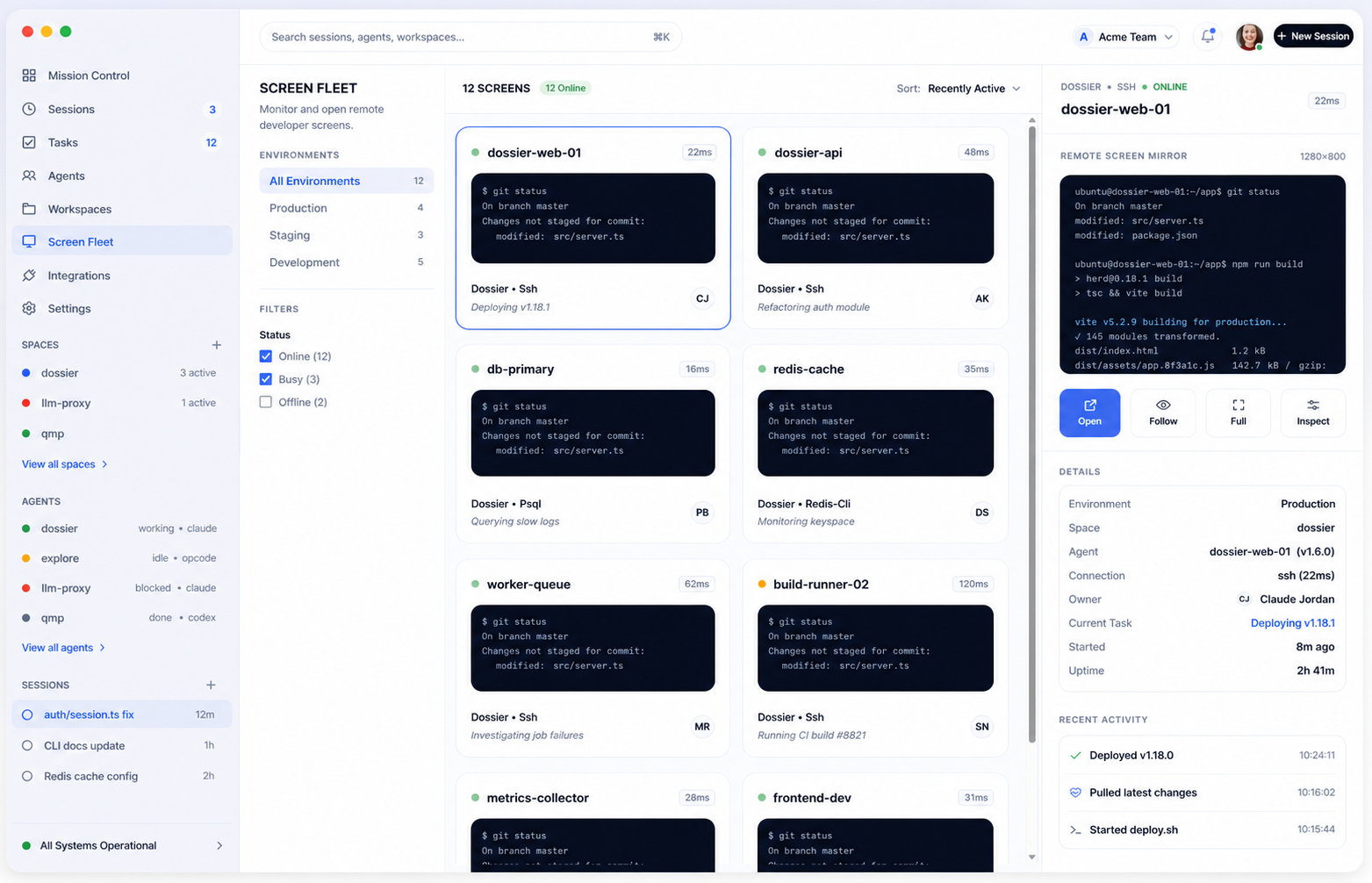
Monitor local machines, SSH targets, remote terminals, preview sessions, server health, and intervention points from one operator surface.
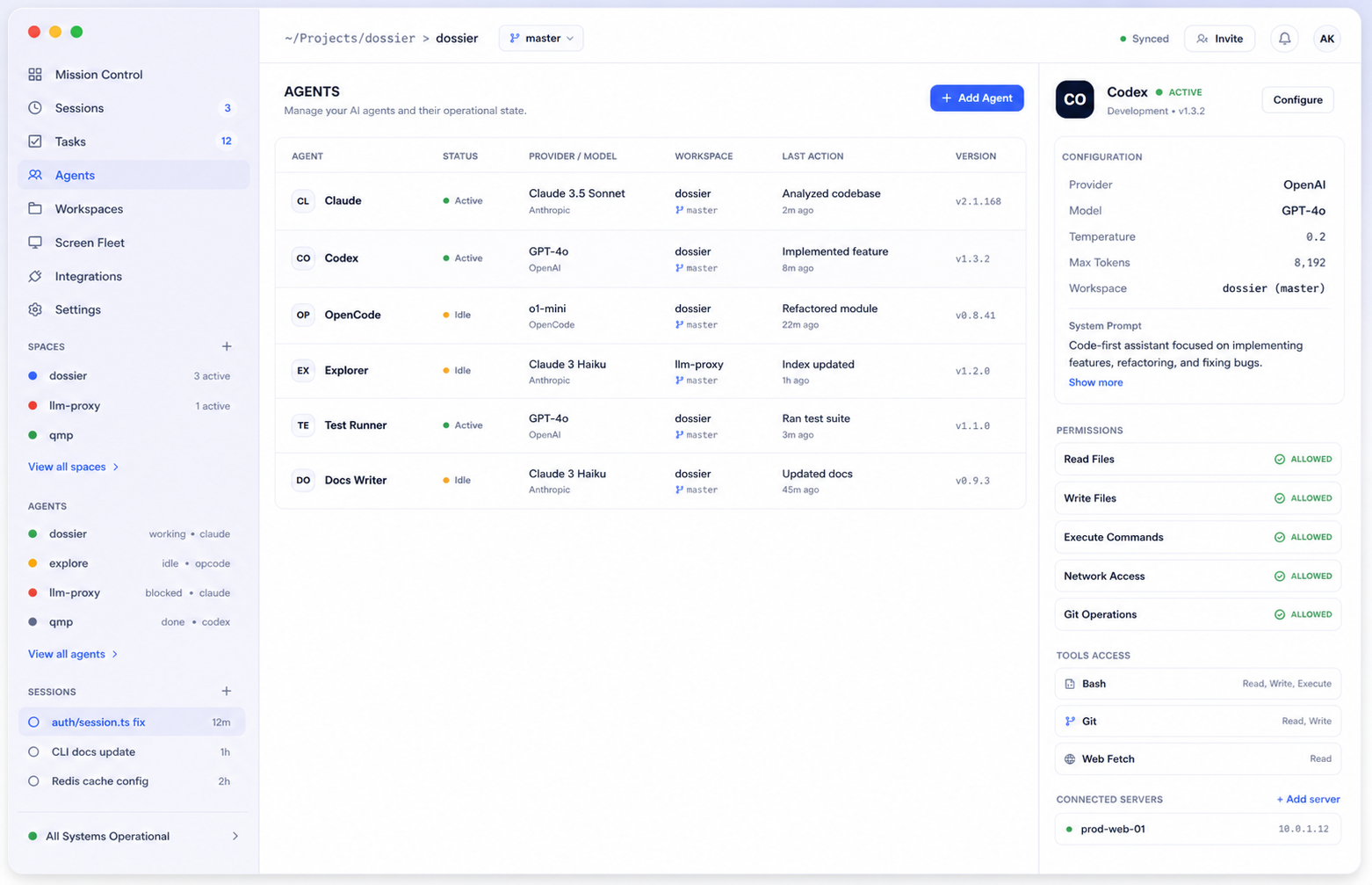
Track coding agents, runtime profiles, capabilities, connection state, permissions, and assigned work across multiple development environments.
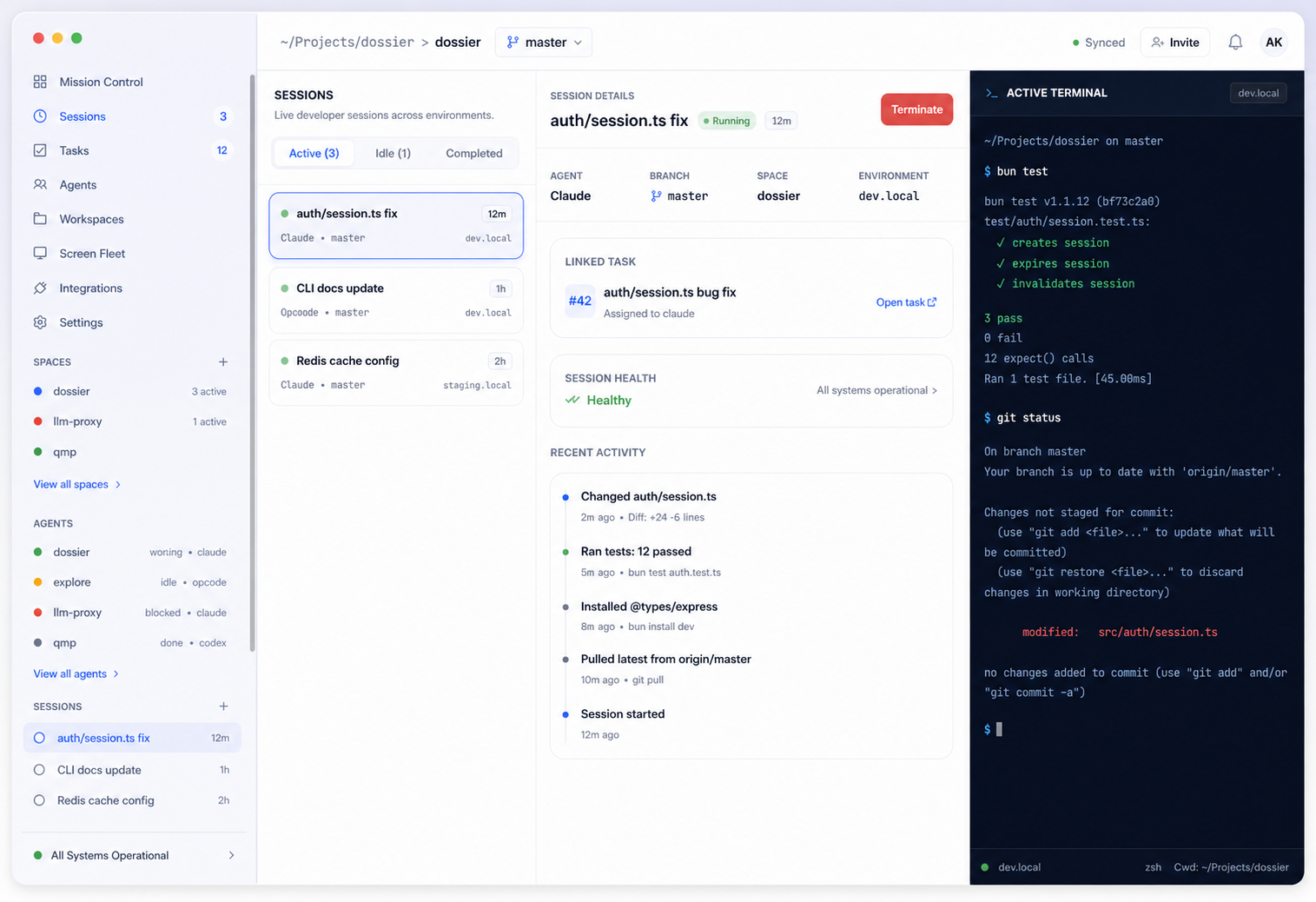
Inspect durable sessions, terminal panes, task context, event timelines, file changes, test evidence, and human takeover points.
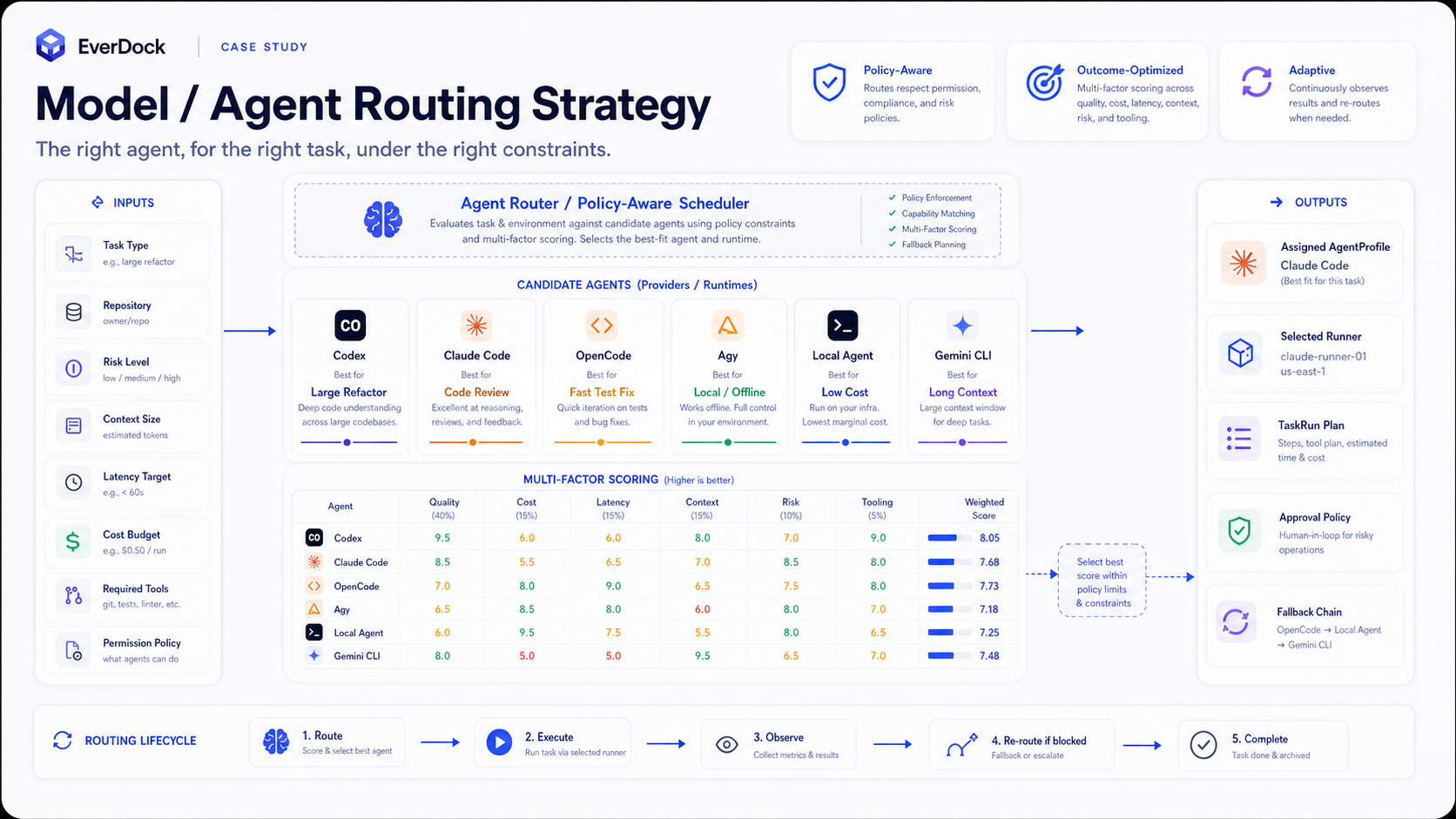
Route work across Codex, Claude Code, OpenCode, Agy, Antigravity, local agents, and other CLI runtimes by task, risk, cost, and environment.
Video & Walkthrough
Timeline
Behind The Project
Beyond an AI chat terminal
EverDock starts from a simple observation: AI coding agents are no longer only answering questions. They can run commands, edit files, create diffs, run tests, and request approval. Once that work happens across servers and repositories, the product needs to manage the whole execution lifecycle, not just a chat box.
Agents as software workers
A task becomes a task run, a task run creates an agent session, and the session produces panes, commands, logs, file changes, diffs, approvals, test results, artifacts, and events. This model gives the operator a way to inspect and resume work instead of guessing what happened inside a terminal.
Risk is part of the workflow
EverDock treats risky actions as product events. Reading files, editing code, installing packages, pushing branches, deploying, touching secrets, or running migrations should not all have the same permission model. Approval enforcement belongs near the Runner executor so safety is not only a UI promise.
From workstation to business platform
The commercial direction is an AI developer operations platform: desktop control plane, local and remote runners, managed servers, team workspaces, API access, mobile/Telegram control, policy, audit, usage limits, and paid plans based on seats, runners, compute, storage, and managed infrastructure.
Gallery
Related writing
Interested in this project?
Let's build practical edge and AI systems for your workflow.