Dossier
A local-first Agentic Document Intelligence platform that turns sensitive documents into reviewable, approved, and integration-ready structured data.
Dossier is a commercial document intelligence product for teams processing PDFs, scans, forms, tables, and handwriting in risk-sensitive workflows. It combines agentic OCR, provider routing, validation, bounded repair loops, risk triage, human review, and evidence-backed export so documents can move from intake to business action with control.
The latest source and some commercial implementation details may not be fully public yet because of versioning, pilot data, enterprise partner, and privacy considerations.
- Created sample fixtures and demo workflows for finance, healthcare, and enterprise operations, including amount mismatch, low-confidence fields, handwriting scenarios, and approval-required documents.
- Currently being tested with 5+ businesses to improve real document workflows and move closer to commercial pilots, funding, and production deployment.
Project Highlights
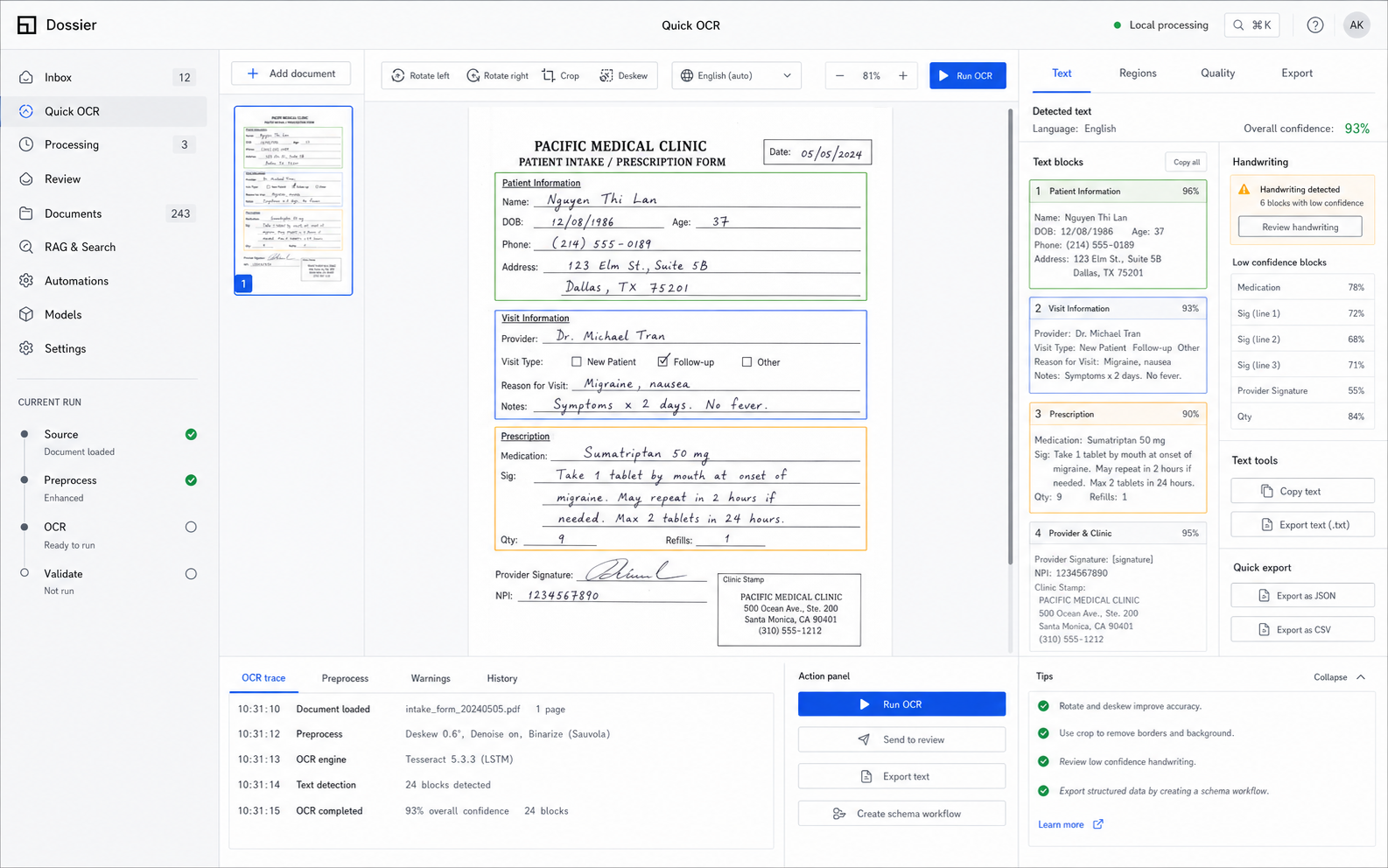
Run lightweight OCR on a PDF or single image before moving a document into the full governed workflow.
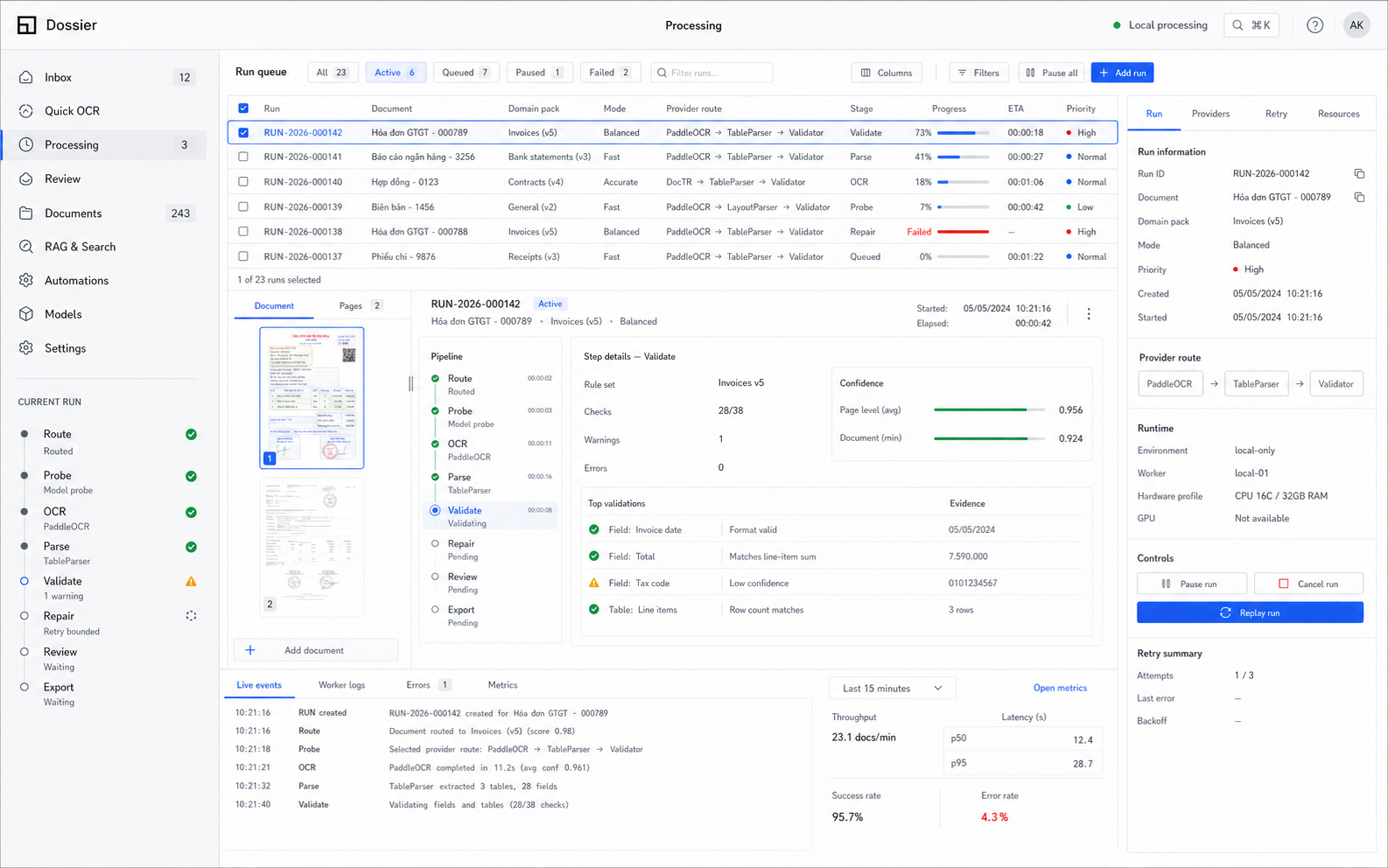
Track pipeline state, run events, artifacts, repair needs, and review steps for each document.
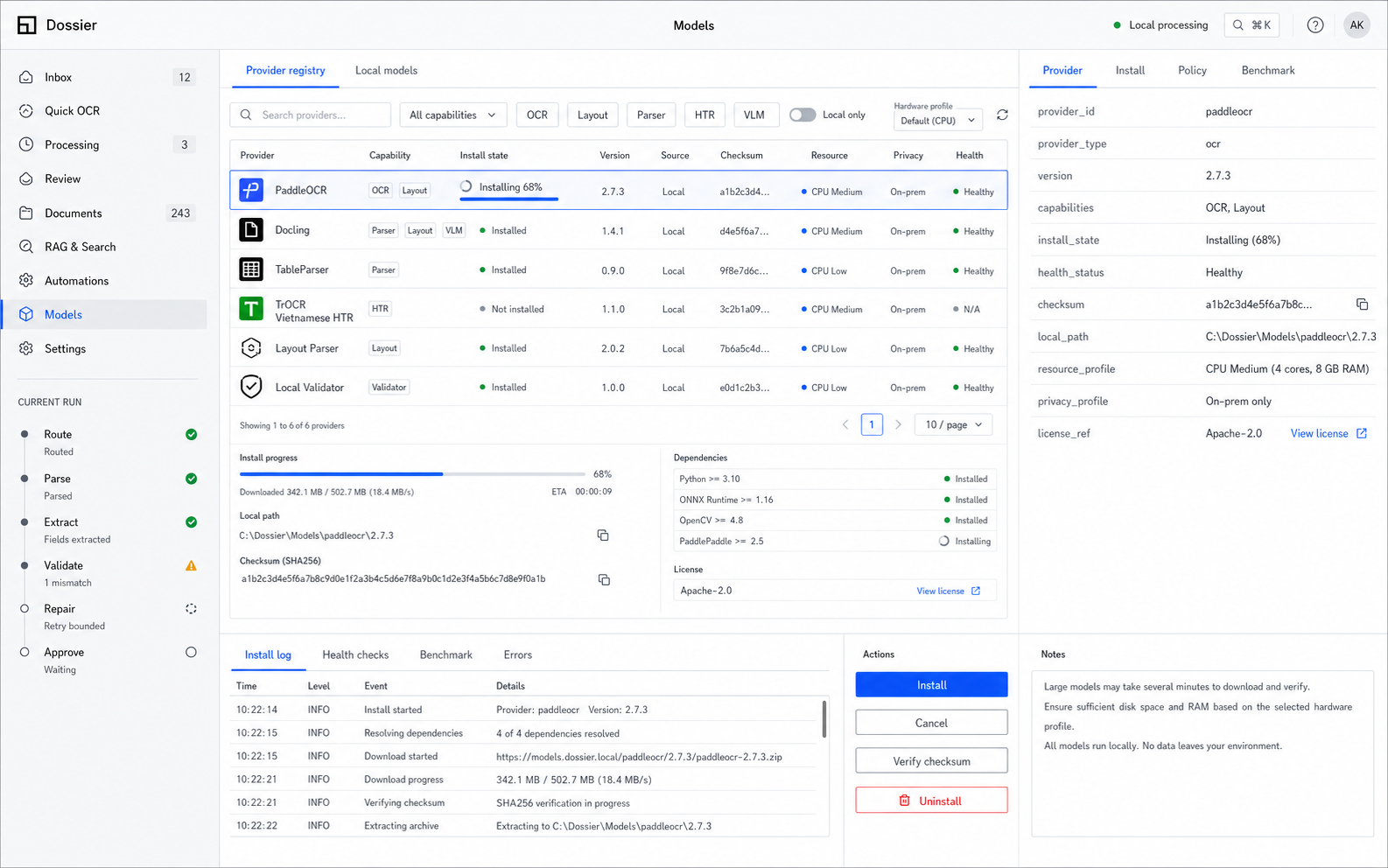
Manage providers, model routing policies, cost, latency, and OCR/VLM/LLM capabilities by document type.
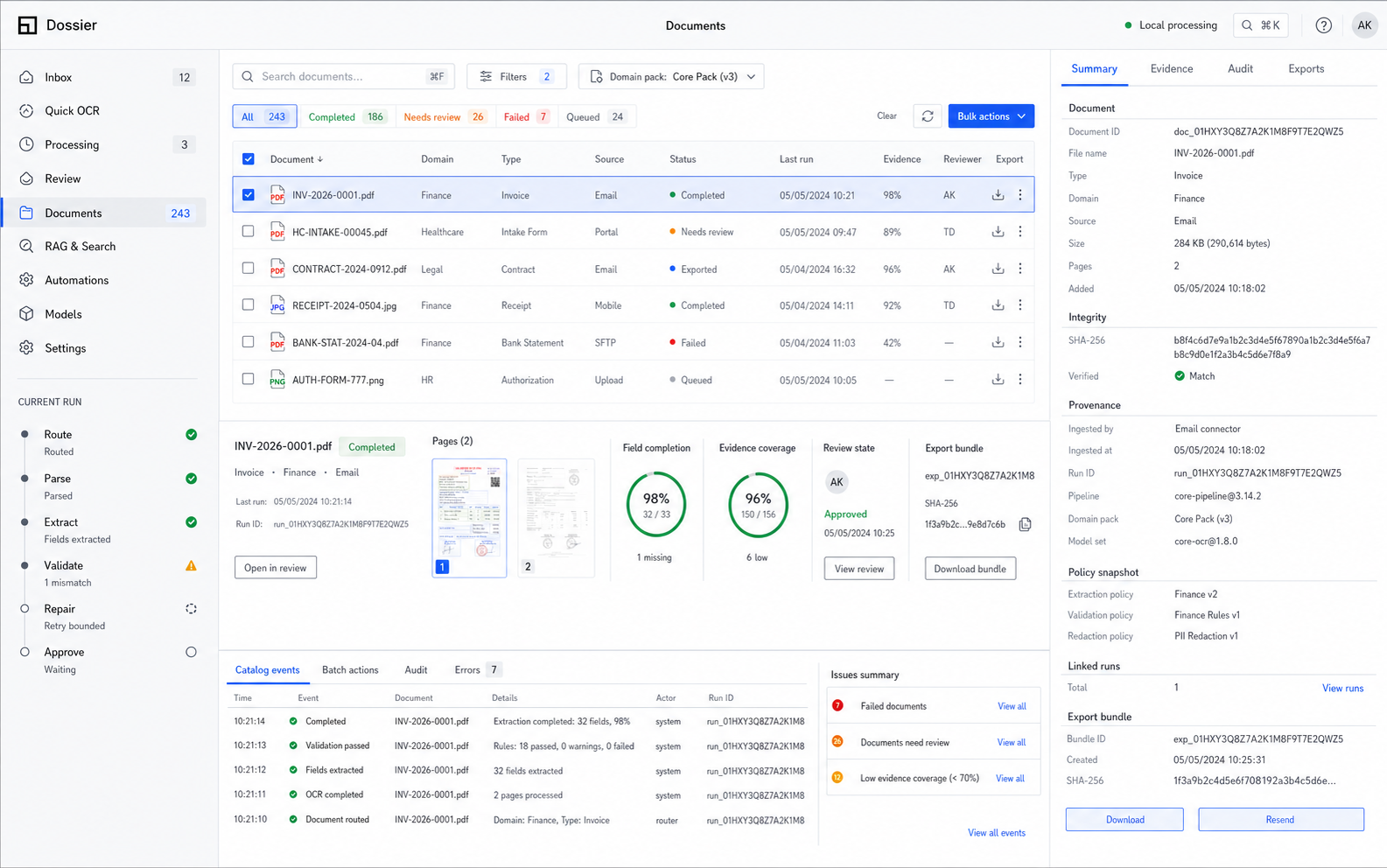
Organize documents, OCR results, metadata, approval status, and evidence for operational review.
Video & Walkthrough
Timeline
Behind The Project
Beyond OCR
Dossier starts from the idea that OCR is only a small part of the document workflow. Businesses need to know which fields are reliable, which fields need review, where the value came from, and who approved it before the data moves downstream.
Agentic but governed
Agents in Dossier are logical pipeline roles: probe, route providers, extract fields, validate, retry, and create review tasks. Each step has limits, events, artifacts, and stop policies so automation remains inspectable.
Risk as product surface
Dossier does not claim to make forensic truth judgments. It focuses on risk triage: detecting mismatches, low-confidence fields, missing data, or unusual values and routing the right evidence to human review.
From trials to commercialization
The product is being tested with 5+ businesses to validate real document handling, reduce manual work, standardize review, and prepare for commercial pilots, paid deployments, and funding conversations.
Gallery
Related writing
Interested in this project?
Let's build practical edge and AI systems for your workflow.